When AI Writes the Crypto, Post-Quantum Becomes Non-Negotiable
AI coding assistants are generating quantum-vulnerable cryptographic code at unprecedented scale, and federal PQC deadlines leave no room for manual audit. Here's what the evidence has to look like — and why it has to be signed.
Audit-Ready AI: Why Every Answer Needs a Paper Trail
NIST and the Department of War both want AI that can show its work. But audit-readiness is an architecture decision, not a compliance checkbox — and the systems that weren't designed for it can't be retrofitted into it.
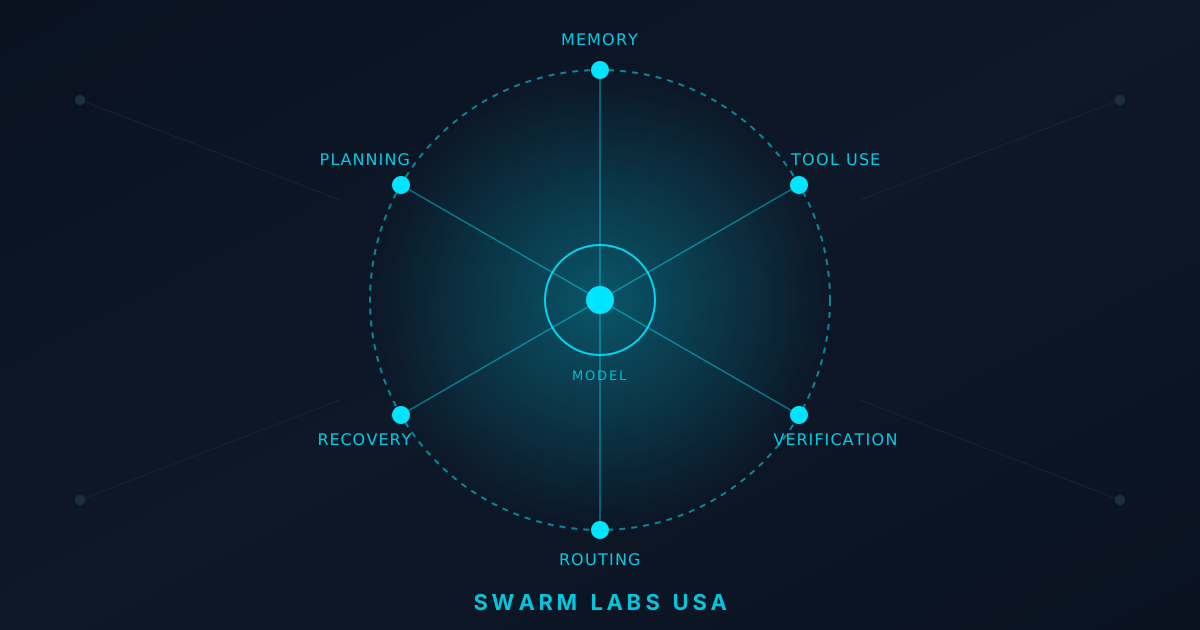
Why Agent Harnesses Are the Real Lever for Small Models
We built a four-phase research pipeline to test whether a curated substrate could turn a 3B local model into a harness expert. What we found changed our fine-tuning plan.

How We Cut AI Compute Costs by 95%
The hybrid pipeline: graph-deterministic agents for speed, guided reasoning for depth. Zero API calls on the fast path. From $8–12 per run down to under sixty cents.

Training Domain-Specific AI on a Laptop
Fine-tuning a 3B model on military intelligence doctrine using QLoRA. Sixteen minutes of training, zero dollars of cost, running on an RTX 5070 laptop.

Why Air-Gapped AI Changes Everything for Defense
Most AI vendors assume you have internet. We assume you don't. Here's why that single design decision changes the entire architecture — and why it matters for government.